
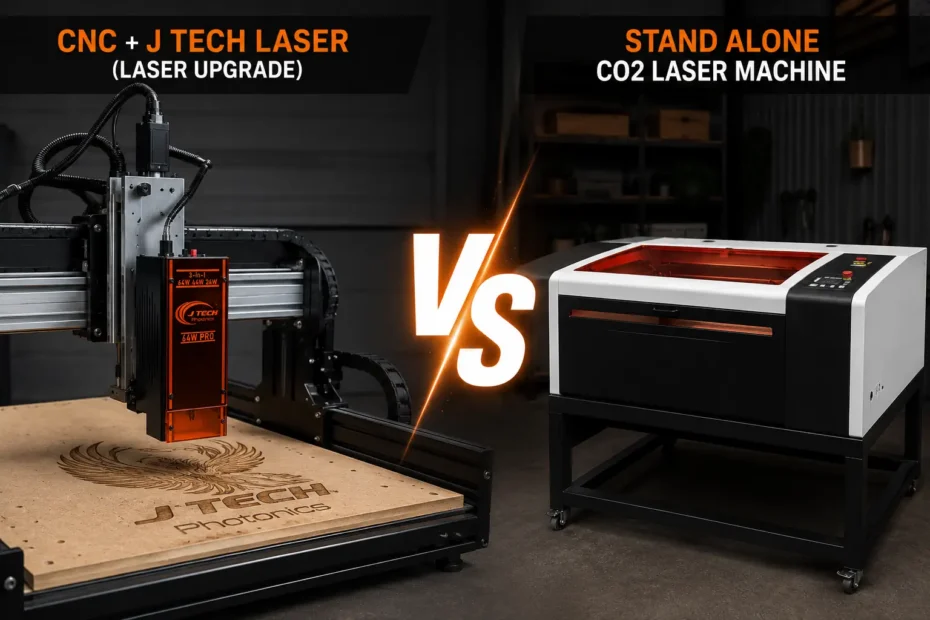
A lot of shops hit the same point at the same time: the CNC is working fine, jobs are coming in, and now you need laser capability for engraving, marking, or light cutting. That is where the laser upgrade versus new machine decision gets real. The question is not which option sounds better on paper. It is which one fits your current machine, your workflow, your space, and your tolerance for setup.
If you already own a capable CNC platform, adding a laser often makes more sense than buying a separate standalone machine. But not always. There are cases where a dedicated laser machine is the cleaner choice. The right answer depends on what you make, how often you switch processes, and whether your existing setup is strong enough to support a reliable laser installation.
Laser upgrade versus new machine: start with the machine you already own
The first thing to look at is not the laser. It is the CNC you already have. If your machine has solid motion control, repeatable positioning, enough working area for your parts, and a practical way to mount and drive a laser system, then an upgrade can be a very efficient path.
That matters because you are not starting from zero. You already know the machine. You know its work envelope, hold-down methods, maintenance habits, and software basics. For many makers and small shops, that familiarity cuts down the learning curve more than people expect.
A new standalone laser machine gives you a separate platform designed around laser work from the start. That can be appealing if your CNC is overloaded, unreliable, or simply not suited for the job. But a new machine also means more floor space, another motion platform to maintain, another set of operating habits, and sometimes another software workflow to manage.
Cost is more than purchase price
The most obvious argument for a laser upgrade is cost. A quality upgrade kit is usually far less expensive than buying a second machine. But the real comparison should include the full setup, not just the item in the cart.
With an upgrade, your cost includes the laser head, driver electronics, machine-specific mounting, wiring, software setup, safety components, and fume control. If the kit is designed around your machine and comes with clear installation support, those costs stay predictable. If compatibility is unclear, the hidden cost shows up later as troubleshooting time.
With a new machine, the price often looks simple at first, but the total can climb fast. You may need a stand, enclosure changes, ventilation, accessories, replacement optics, electrical changes, and room to operate it safely. Then there is the cost of a second machine sitting idle when your workload is mostly router work.
For a shop that wants occasional to moderate laser use, upgrading an existing CNC is often the better use of budget. For a production environment that needs constant laser throughput, a dedicated machine may earn its footprint.
Workflow matters more than specs
This is where buyers often make the wrong call. They compare wattage, speed claims, or work area before they think about how jobs actually move through the shop.
If you want to engrave signs, mark parts, personalize wood products, or add graphics to pieces that are already fixtured on your CNC, a laser upgrade can be extremely efficient. You can route and laser on the same platform without moving the workpiece to a second machine. That helps with alignment, reduces handling, and keeps registration tight.
That single-platform workflow is a real advantage for mixed-process jobs. You cut the part, then engrave details exactly where they belong. No separate setup. No re-zeroing on another machine. No hoping the second machine matches the first one.
A dedicated laser machine becomes more attractive when laser work is its own production stream. If one person is routing cabinet parts while another is engraving batches of tags, a separate laser prevents downtime caused by machine sharing. In that case, the value is not just laser performance. It is parallel production.
Space, power, and shop simplicity
Many small shops and home-based makers do not have room for another full-size machine. That alone can settle the decision.
A laser upgrade uses the motion system you already own, which keeps your footprint under control. It also simplifies power planning and shop layout. You still need proper laser safety measures, shielding where appropriate, and fume extraction, but you are not rearranging the whole shop around another machine.
A new laser machine can make sense if it comes with built-in features that your current setup would need added separately. Even then, ask whether those features solve a problem you actually have. Paying for a second machine because it feels more complete is different from paying for one because your current CNC cannot be upgraded cleanly.
Compatibility is the deciding factor
This is the part that separates a smooth upgrade from a frustrating one. A laser upgrade only works well when the system is designed for real machine compatibility, not generic fitment.
That means the mounting hardware should be appropriate for the machine. The driver integration should match the controller output. The wiring should be clear. The documentation should explain setup for your platform, not leave you guessing across forums. Software settings should be grounded in tested use, not trial and error.
For older DIY and legacy CNC systems, this support matters even more. Many users have solid machines that are no longer mainstream, but still perfectly useful. A compatible laser system can extend the life of that platform in a meaningful way. J Tech Photonics has built much of its reputation on exactly that type of machine-specific upgrade path.
If your CNC has poor rigidity, inconsistent motion, outdated control limitations, or no practical way to integrate laser control, then forcing an upgrade may cost more time than it saves. That is one of the clearest cases for buying a dedicated machine instead.
Safety is not optional in either direction
A laser upgrade is not the cheaper path if safety gets treated like an afterthought. The same goes for a new machine.
You need proper eye protection matched to the laser wavelength, responsible beam management, controlled operation, and effective fume handling. Material choice matters. Ventilation matters. Shielding matters. Operator discipline matters.
Some buyers assume a standalone laser machine is automatically safer. Sometimes it is easier to manage because the system is more enclosed, but that does not remove the need for proper operation and material awareness. An upgraded CNC can be used safely if it is installed correctly and equipped with the right accessories and controls. What matters is whether the setup is built and used responsibly.
Output expectations should stay realistic
The laser upgrade versus new machine question also depends on what you expect the laser to do.
If your main goal is engraving wood, leather, coated metals, acrylic in appropriate applications, and marking or light cutting on supported materials, a CNC laser upgrade can deliver excellent results. It is especially strong for users who value flexibility and already have a machine capable of accurate motion.
If your expectation is heavy production cutting across thicker materials all day long, you may be comparing two different classes of equipment. At that point, the question is less about upgrade versus new and more about whether you need a dedicated industrial laser platform built for that duty cycle.
That is why honest application planning matters. Buyers get the best results when they define material type, thickness, part size, engraving detail, and production volume before choosing hardware.
So which one makes sense?
If you already own a reliable CNC, want to add laser capability without doubling your floor space, and value using one platform for both routing and engraving, a laser upgrade is usually the smarter move. It keeps costs lower, leverages the machine you know, and can create a very efficient workflow when the system is built around your specific CNC.
If your shop needs constant laser production, your current machine is a poor fit for integration, or you want a fully separate process running at the same time as routing, a new machine may be the better investment.
The right choice is rarely about chasing the newest equipment. It is about matching the tool to the work. Start with the machine you have, look hard at compatibility and safety, and choose the option that helps you make parts with less friction, not more.
A good upgrade should feel like an extension of a capable CNC, not a science project. If your setup can support that, adding laser capability is often the fastest path to doing more with the machine already earning its place in your shop. If you are ready, you can find the best upgrade solutions at J Tech Photonics shop here.