

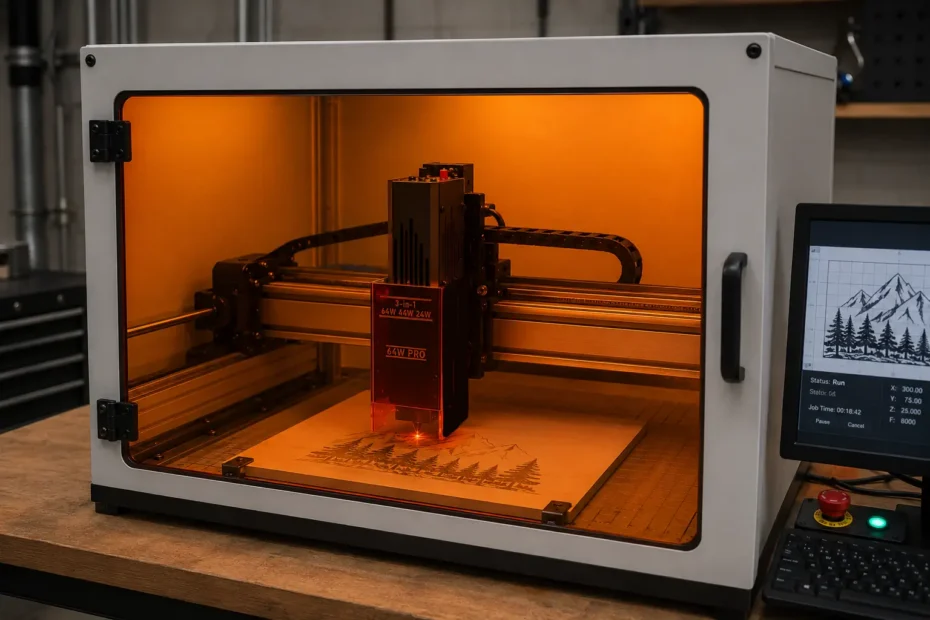
A laser shield for CNC machine setups usually becomes a priority right after the first test fire. The beam is bright, reflections can be unpredictable, and once you move from idea to actual engraving or cutting, safety stops being an accessory purchase and starts being part of the machine.
For CNC owners adding a diode laser, the shield is not just there to make the setup look finished. It helps control stray light, improves operator comfort, and supports a more disciplined work area. If you are upgrading an existing router or gantry instead of buying a dedicated enclosed laser system, shielding is one of the key parts that makes that upgrade practical.
What a laser safety shield for CNC machine setups actually does
A shield is there to reduce exposure to direct and reflected laser light in the working area. On an open-frame CNC, that matters because the machine was originally built for routing, probing, and spindle-driven work, not for managing optical hazards. Once a laser head is installed, the risk profile changes.
In real use, the shield usually serves three jobs at once. It blocks or filters line-of-sight exposure around the laser head, it limits distracting glare while engraving, and it creates a more controlled operating zone around the beam path. That last point matters more than many first-time users expect. Even when the laser is aimed correctly, reflective surfaces, clamps, and certain materials can send light where you do not want it.
A shield does not replace proper laser safety practices. It does not turn an open machine into a fully enclosed industrial system. It is one layer in a broader setup that should also include correct eyewear where required, controlled operation, suitable materials, and attention to fume handling.
Why open CNC laser upgrades need shielding
The main appeal of a CNC laser upgrade is efficiency. You keep the machine you already know, add laser capability, and avoid dedicating floor space and budget to a separate platform. That makes sense for many shops and makers, but it also means you are adapting a machine architecture that was not originally built around laser containment.
That is where shielding earns its place. A spindle-based CNC leaves the cutting area visible and accessible. That is useful for routing. For laser work, it creates more exposure risk for the operator and anyone nearby. A properly designed shield helps bring that open format under better control without giving up the flexibility that made the upgrade attractive in the first place.
There is also a workflow benefit. Operators tend to do better work when they can watch the process without being overwhelmed by glare. With the right shield material and positioning, you can monitor engraving more comfortably, check alignment more confidently, and spend less time fighting visual fatigue.
Material choice matters more than people think
Not all shield materials are equal, and this is where buyers can make a poor decision by shopping only on appearance. A tinted panel that looks substantial may not be suitable for your laser wavelength or power level. For diode laser systems used on CNC machines, the shield material needs to be selected for the application, not just for general visibility reduction.
The basic question is simple: what is the shield rated or intended to block, and how does that align with your laser? If the answer is vague, that is a problem. CNC owners working with laser upgrades should look for shielding designed around the type of laser being used, with clear information on compatibility.
There is also a practical balance between protection and visibility. Darker is not automatically better. If the shield reduces visibility too much, operators may be tempted to work around it, move it out of position, or rely on awkward viewing angles. Good shielding should support safer behavior, not encourage shortcuts.
Visibility versus coverage
A larger shield gives better coverage, but it can also create mounting and access issues. A compact shield mounted close to the laser head can move with the gantry and keep protection localized. That approach works well for many retrofit CNC systems because it does not require building a full cabinet around the machine.
Still, the shield has to be large enough to intercept likely viewing angles and common reflections. If it is too small, it may technically sit near the beam while doing very little in practice. The right size depends on the machine layout, the mounting height of the laser, and how the operator normally interacts with the table.
Mounting and machine integration
A laser shield for CNC machine use should fit the way the machine actually runs. That sounds obvious, but this is where generic accessories often fall short. If the shield interferes with workholding, blocks nozzle access, shakes loose during rapid moves, or makes focusing harder than it needs to be, it becomes a source of frustration.
For retrofit laser systems, mounting is usually best when it is tied directly to the laser head or a purpose-built bracket. That keeps the shield aligned with the active work zone as the machine moves. It also simplifies setup because the operator does not need to constantly reposition a freestanding barrier.
Magnetic and machine-specific mounting options can be especially useful on maker and small-shop platforms because they reduce fabrication time and make removal easier when switching between routing and laser work. That flexibility matters if your CNC does double duty. A good upgrade path should not force you into rebuilding the front end of the machine every time you change processes.
Clearance, airflow, and access
One trade-off with close-mounted shielding is clearance. If the shield sits too low or too wide, it can interfere with stock variation, clamps, rotary accessories, or uneven material surfaces. It can also affect airflow around the cut area if you are using air assist or localized fume control.
That does not mean smaller is always better. It means the shield has to be designed with real machine use in mind. You want enough coverage to improve safety and comfort, but not so much bulk that normal operation becomes awkward.
Shielding is only one part of safe laser operation
This is the point worth stating plainly: a shield helps, but it is not the whole safety system. CNC users sometimes look for one product that solves every laser concern at once. That is not how safe integration works.
You still need to think about eye protection, controlled access to the machine during operation, suitable materials, beam path awareness, and fume extraction or filtration. If you are engraving wood, acrylic, painted stock, leather, or other common shop materials, smoke and combustion byproducts become part of the job immediately. Shielding does nothing to remove fumes.
You also need to think about operating habits. A well-installed laser system with a proper shield can still be used carelessly. Leaving the machine unattended, processing unknown materials, or running with poor focus are all preventable problems that shielding does not fix.
For that reason, the best setups treat the shield as part of an integrated upgrade. The laser, driver, mount, control workflow, software setup, and safety accessories should make sense together. That is generally where purpose-built CNC laser suppliers have an advantage over pieced-together generic parts.
What to look for before you buy
Start with compatibility. The shield should make sense for your laser type, your machine geometry, and the way you mount the laser. Then look at the operator experience. Can you still see the work clearly enough to set focus, verify positioning, and monitor the job? Can the machine travel its full intended range without the shield contacting clamps, spoilboard fixtures, or material edges?
Next, pay attention to installation. A good shield should not require excessive improvisation. If you already have enough variables in your upgrade, adding a part that needs custom rework may not save time or money.
Finally, think honestly about your workflow. If your CNC runs occasional engraving jobs on flat stock, a compact head-mounted shield may be enough. If you are using a larger bed, processing reflective materials, or working in a shared environment, you may need a broader shielding strategy around the machine. It depends on how the system is actually used, not just on the spec sheet.
J Tech Photonics has built much of its product approach around that real-world integration mindset. For CNC owners, the value is not just getting a laser onto the machine. It is getting a setup that can be installed, operated, and supported without guesswork.
The right shield supports the upgrade you already wanted
Most CNC owners do not add a laser because they want a more complicated machine. They add one because they want more capability from the machine they already trust. A well-chosen shield supports that goal by making laser work more controlled, more usable, and easier to manage in a real shop environment.
If the part you are considering improves visibility, fits the machine cleanly, and aligns with your laser system instead of fighting it, that is usually the right direction. The best safety accessory is the one that gets used every time because it fits the job, the machine, and the way you actually work.